Flower Girls & Ring Bearers: A Calm, Honest Guide to the Aisle
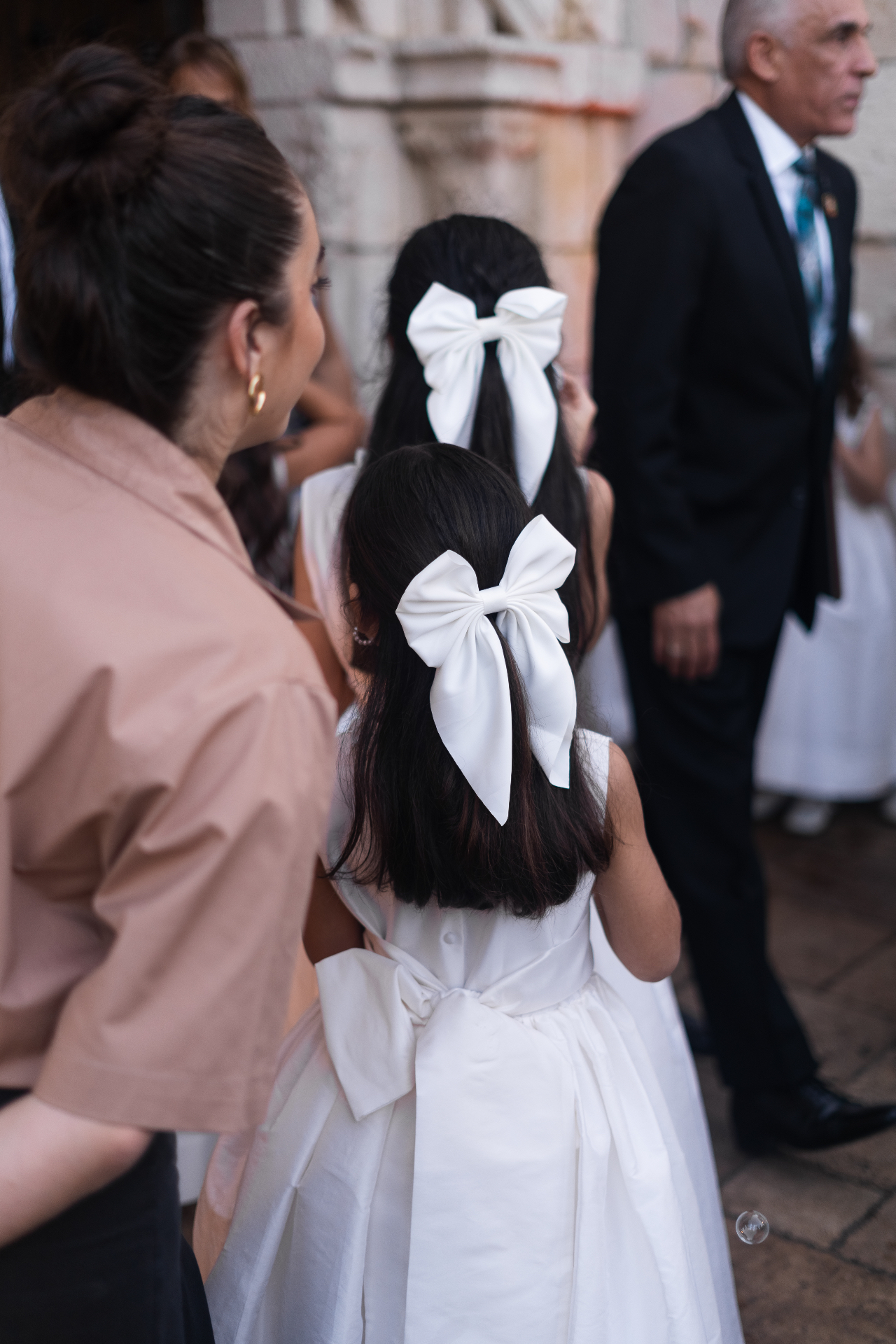
Everyone remembers the flower girl. Sometimes because she scattered every petal in the first three steps, sometimes because she stopped halfway down the aisle to wave at her grandmother, and sometimes because she simply refused to walk at all — and that became the story the family told for the next twenty years.
We have stood quietly at the back of a lot of aisles in Miami, Palm Beach and the Keys. Here is what we have learned about giving these small people the best possible chance of a beautiful moment, without turning it into one more thing for you to manage on the morning of your wedding.
What age actually works?
The traditional range is three to eight, and that range exists for a reason. But age is less useful than temperament. A confident three-year-old who loves an audience will sail down the aisle. A shy six-year-old may freeze the moment two hundred faces turn toward her.
A more useful question than "how old are they?" is: has this child ever walked into a room full of strangers and enjoyed it? If the answer is no, plan for a companion — an older cousin, a sibling, or a parent waiting a few rows in.
Under three, treat the walk as a lovely possibility rather than a plan. Wagons, being carried, or simply being seated with family are all perfectly elegant outcomes.
Do the flower girl and ring bearer walk together?
They can, and often it helps. Two children walking side by side are noticeably braver than one child walking alone. Pair them if they know each other; separate them if they are likely to compete, race, or start a conversation halfway down.
Traditionally, they enter just before the bride — after the wedding party, so the aisle is clear and every eye is already forward. If your ceremony is long or the processional is elaborate, consider sending them earlier so they are seated and settled well before vows begin.
The rehearsal is worth more than the outfit
Children do beautifully with rehearsal and poorly with surprise. Ten minutes the day before — walking the actual aisle, seeing the actual chairs, learning exactly where to stop and who they sit with — removes most of what goes wrong.
Give them a single, concrete instruction. Not "walk slowly and scatter the petals evenly," but "walk to Mommy and sit down." One job. One destination.
Petals, baskets and rings: quiet logistics
- Check your venue's petal policy. Many South Florida gardens, historic properties and beachfront venues restrict real petals, or require silk only.
- Never give a child the real rings. Every experienced planner will tell you the same thing: decorative rings on the pillow, real rings with the best man.
- Weight the basket lightly. A heavy basket becomes a dragged basket by the third row.
- Dress for the climate. In a Miami summer, a stiff, layered dress or a full suit on a five-year-old is the fastest route to tears. Breathable fabrics, and let them change after photographs.
The part almost nobody plans for
Here is what we see most often, and it has nothing to do with the aisle.
The processional goes perfectly. The photographs are lovely. And then the ceremony ends, cocktail hour begins, and a four-year-old in formalwear is standing in a beautiful courtyard with nothing to do, no nap, and two parents who are now being pulled into family portraits.
That is the hour where the day gets harder — not the walk. The flower girl who was radiant at 5:00 is overwhelmed by 6:30, and her parents spend the rest of your reception outside with her instead of on the dance floor.
It is a genuinely solvable problem. A dedicated, calm space with someone whose only job is those children means the transition from ceremony to celebration is soft instead of abrupt: out of the formal clothes, something to eat, something quiet to do, and a nap if a nap is needed.
A simple plan that works
- Rehearse the walk once, on the real aisle, the day before.
- Give one instruction and one clear destination.
- Pair them if they are nervous; separate them if they are excitable.
- Take their photographs early, while they are fresh and the clothes are still perfect.
- Have somewhere for them to go the moment the formal part is over.
- Let go of the outcome. The unplanned moments are the ones your guests will still be talking about.
One last thing
If the flower girl stops, waves, sits down, or runs back to her mother — the room will love it. Nobody has ever remembered a wedding as ruined by a child who behaved like a child. Plan well, then let the day be human.
If you would like your youngest guests looked after from the moment the ceremony ends, we build a calm, beautifully organized Kids Lounge into weddings across South Florida. Check availability for your date and we will send a staffing plan within 24 hours.
Frequently Asked Questions
What age should a flower girl or ring bearer be?
The traditional range is three to eight years old, but temperament matters more than age. A confident three-year-old often walks happily, while a shy six-year-old may freeze. Under three, treat the walk as a lovely possibility rather than a plan and have a companion or wagon ready.
Do the flower girl and ring bearer walk down the aisle together?
They can, and it often helps — two children walking side by side are noticeably braver than one alone. Pair them if they know each other, and separate them if they are likely to race or chat halfway down the aisle.
When do the flower girl and ring bearer enter the ceremony?
Traditionally they enter just before the bride, after the wedding party, so the aisle is clear and all eyes are ready. If a child is nervous, entering earlier with the wedding party gives them company and less pressure.
Should the ring bearer carry the real rings?
Usually not. Most couples give the ring bearer a decorative box or tied ribbon rings while the best man or officiant holds the real bands. It removes all risk and no guest ever notices.
What do children do after the wedding ceremony?
This is the part most couples forget to plan. After the ceremony children are dressed up, excited and quickly tired. A supervised Kids Lounge with professional nannies, quiet activities, meals and rest space keeps them happy and lets parents enjoy the reception.
Do we need a nanny just for the flower girl and ring bearer?
If only one or two children attend, a single dedicated nanny is usually enough to manage the aisle moment and the hours after. With more children, staffing is set by age mix and headcount so every child stays safely supervised.
Planning Your Wedding?
Get a Free Childcare Quote
Share your name and date — we'll send a custom staffing plan and pricing.
No spam · No obligation · Response within 24 hours

Alekai Wedding Nannies
Professional Wedding Childcare
Wedding Childcare
Ready to plan childcare for your wedding?
Share your date and venue — we'll send you a personalized quote within 24 hours. Free, no obligation.
★ 5-Star Rated · Response within 1 hour